Contributed by David Carrier / Rebuilding seems to be a cyclical occurrence for older art museums. The collection expands, styles of display change, more capacious restaurants and shops may be needed. Older museums have to construct new galleries. To the original European galleries, entered atop the stairs at the entrance, the Metropolitan Museum of Art added space for Islamic art, contemporary work, and Asian paintings. Alternatively, a wealthy museum can rebuild almost from scratch, as MoMA has repeatedly done. Yet, for most of the time I have been going to art museums, New York’s Frick Collection has been basically unchanged, an island of stability. I remember once being shocked that one of its masterworks – Rembrandt’s The Polish Rider – was away on loan. No other major New York art institution has remained basically the same over such a lengthy period, celebrating idiosyncratic displays that mix sacred and secular works in a luxurious setting. Henry Clay Frick had a great eye.
Search Results for "label/Museum of Contemporary Art"
LA PST Report: Toward better social behavior
Contributed by Peter Plagens / The first edition of the Getty-sponsored “Pacific Standard Time” slate of exhibitions in 2011 was subtitled simply “Art in L.A., 1945 – 1980,” and it aimed to elucidate Southern California’s contribution to American postwar modern art. In 2017, the second iteration was called “LA/LA,” indicating the city’s Latin American art and artists. This time around PST has declared a more specific theme, “Art and Science Collide,” reminiscent of one of those noble Rose Parade rubrics…
How the term “zombie formalism” killed the next generation
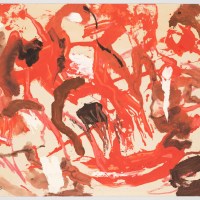
Contributed by Sharon Butler / In 2014, a single phrase reshaped the trajectory of contemporary abstract painting. When the late Walter Robinson – painter, critic, and veteran of the Pictures Generation – coined the derogatory term “zombie formalism” in an essay for Artspace, he set off a chain reaction that would stigmatize a generation of young abstract artists and cast a long shadow over abstraction in general. More than a decade later, the story of zombie formalism reads as a pungent example of aesthetic cynicism and jadedness – a case study in how criticism, commerce, and cultural anxiety can converge to distort and ultimately damage an entire movement.
Surface, flourish, complexity at the Hessel Museum
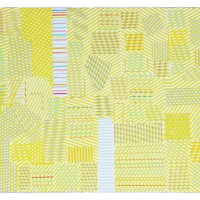
Contributed by Anne Swartz / Since its origins in the 1970s, practitioners and advocators of the Pattern and Decoration movement have countered claims that decorative art lacked seriousness. In America at the time, critical arguments focused on the exhaustion of painting, positioning it as an outmoded visual form. Several artists resisted this affront. Instead, they embraced images for their pleasure, opposing the notion of immediacy often considered synonymous with other mediums such as photography.
Armin Kunz: Presentism and art history
Contributed by Armin Kunz / �Can we ever look at Titian�s paintings the same way again?� asked Holland Cotter when he reviewed the reunion of […]
Finding Esphyr Slobdokina
Contributed by Peter Plagens / When the annual The Armory Show art fair — which takes place on the piers on the Hudson River in […]
Catalogue essay: Paul Pieroni on Peter Halley’s 1980s painting
The aim of this text, which was originally published as “Facts are Useless in Emergencies” in Peter Halley: Paintings of the 1980s The Catalogue Raisonne, […]
Carter Ratcliff: Art in the age of Trump
Contributed by Carter Ratcliff / Let�s begin with a painting�not sure it�s a work of art�that could have been painted only now, during Trump�s presidency. This […]
A better bonfire at the Whitney: Painting from the 1980s
Contributed by Jonathan Stevenson / “Fast Forward: Painting from the 1980s,” the Whitney’s trenchant exhibition of American work, immediately recalls the Reagan era, when bluffness […]
Web world: The New Museum’s 2015 Triennial
Entering the New Museum’s 2015 Triennial “Surround Audience” is like stepping into someone else�s search history. If you�re passionate about the same information that he […]
Jim Isermann’s squareness
In ArtForum this month, Annie Buckley picks Jim Isermann�s elegant psychedelic paintings, which have graced the walls, floors, and ceilings of galleries, hotels, universities, stores, […]
Recto or Verso: What kind of artist are you?
Barnett Newman, Two Edges, 1948, oil on canvas, 48 x 36 inches. Museum of Modern Art, gift of Annalee Newman (by exchange). Barnett Newman Foundation […]
The New Casualists
Contributed by Sharon Butler / The pioneers of abstraction — the Cubists, the Abstract Expressionists, the Minimalists — emerged from firm and identifiable aesthetic roots […]
Painting strategies at the 2012 Whitney Biennial
The 2012 incarnation of the Whitney Biennial features (in addition to a huge slate of film and video screenings in a side room and performance on […]
Helen Frankenthaler: More profound than lyric
After seeing the exhibition at Gagosian, I’ve become a huge Helen Frankenthaler fan. Curated by John Elderfield, Chief Curator Emeritus of Painting and Sculpture […]
The second wave of the Soviet avant-garde
“Nonconformists on Red Square” The Historical Museum, Moscow. Through Sept. 17 Tatyana Gershkovich reports in the Moscow Times: “‘We didn’t drink, we didn’t smoke, we […]
SAM slam
Lee Rosenbaum Lee Rosenbaum reports today in the Wall Street Journal: “Most museums expand to make room for their existing permanent collections. The Seattle Art […]
Munch: Navigating the messiness of his own present
The Munch exhibition at the Art Institute of Chicago, curated by Jay A. Clarke, brings together approximately 150 works, including 75 paintings and 75 works […]